Ingredients / GHK-Cu
GHK-Cu (copper tripeptide-1): what it is and how it's used in skincare
Updated 14 November 2026
- Name on an ingredient list
- Copper Tripeptide-1
- Also called
- copper peptide, glycyl-L-histidyl-L-lysine copper, CAS 89030-95-5
- Peptide formula
- C14H24N6O4, about 340 g/mol before copper
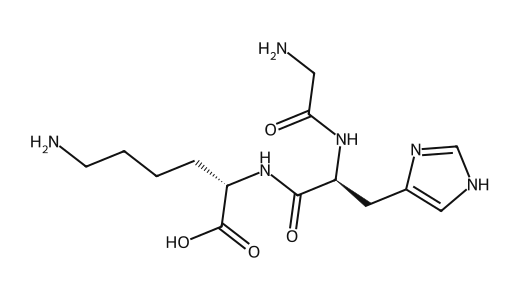
What GHK-Cu is
GHK is a tripeptide: three amino acids, glycine, histidine and lysine, joined in a short chain. It was first identified in human blood plasma in 1973 by the biochemist Loren Pickart, and it occurs naturally in the body.
GHK holds on to copper very readily. When it’s carrying a copper ion it’s written GHK-Cu, and on a cosmetic ingredient list it appears as copper tripeptide-1.
How it’s used in skincare
GHK-Cu is used as an active ingredient in leave-on products such as creams and serums. Brands sell it for skin that looks firmer and smoother, and it has been one of the more studied cosmetic peptides since the 1980s.
A fair summary of the evidence: there’s a lot of laboratory work and a number of small studies in people, and far fewer large, independent trials. It’s a cosmetic ingredient with an interesting research history, not a medicine.
Strength: the number most labels leave off
The amount of GHK-Cu in a product matters, and it’s the thing most labels don’t tell you. An ingredient list only shows the order ingredients come in. A product can name copper tripeptide-1 and contain a trace.
Things to look for:
- A stated percentage. If the label or the brand won’t say how much is in there, assume it’s not much.
- The colour. GHK-Cu is blue. A white or clear product with no added colour has very little copper peptide in it.
- Where it sits on the ingredient list. Ingredients at 1% or more are listed in descending order, so the position gives you a rough idea.
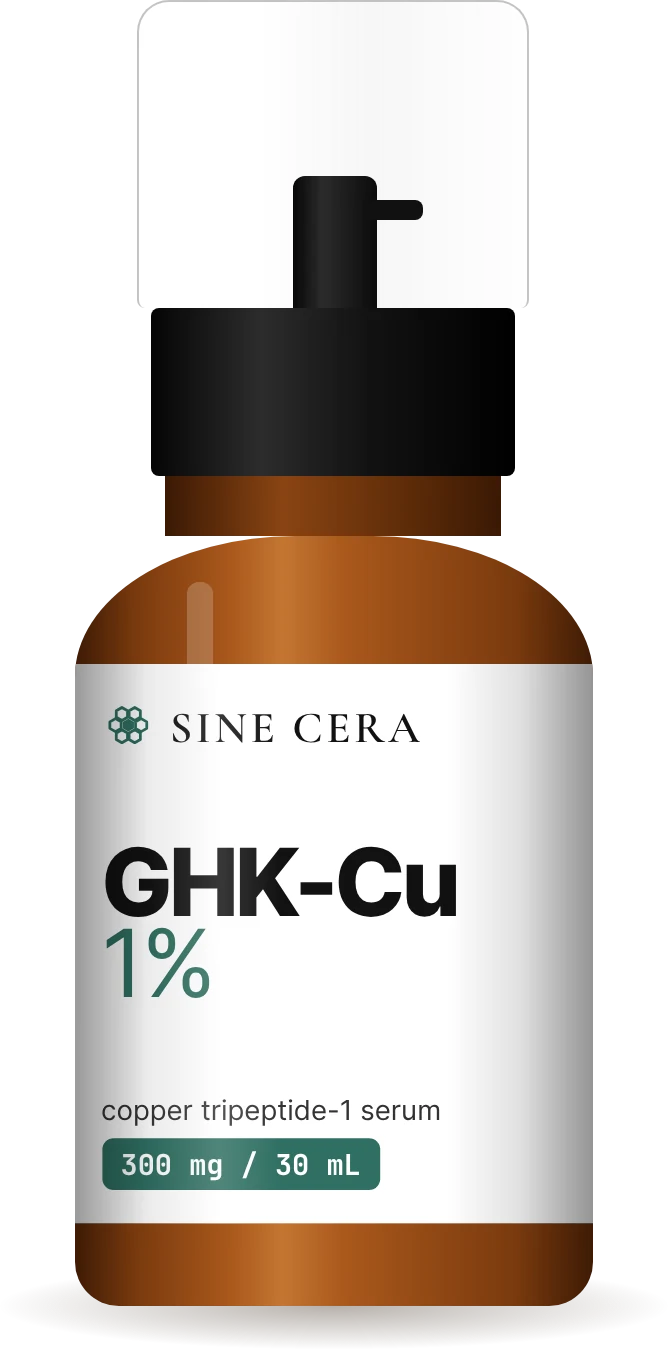
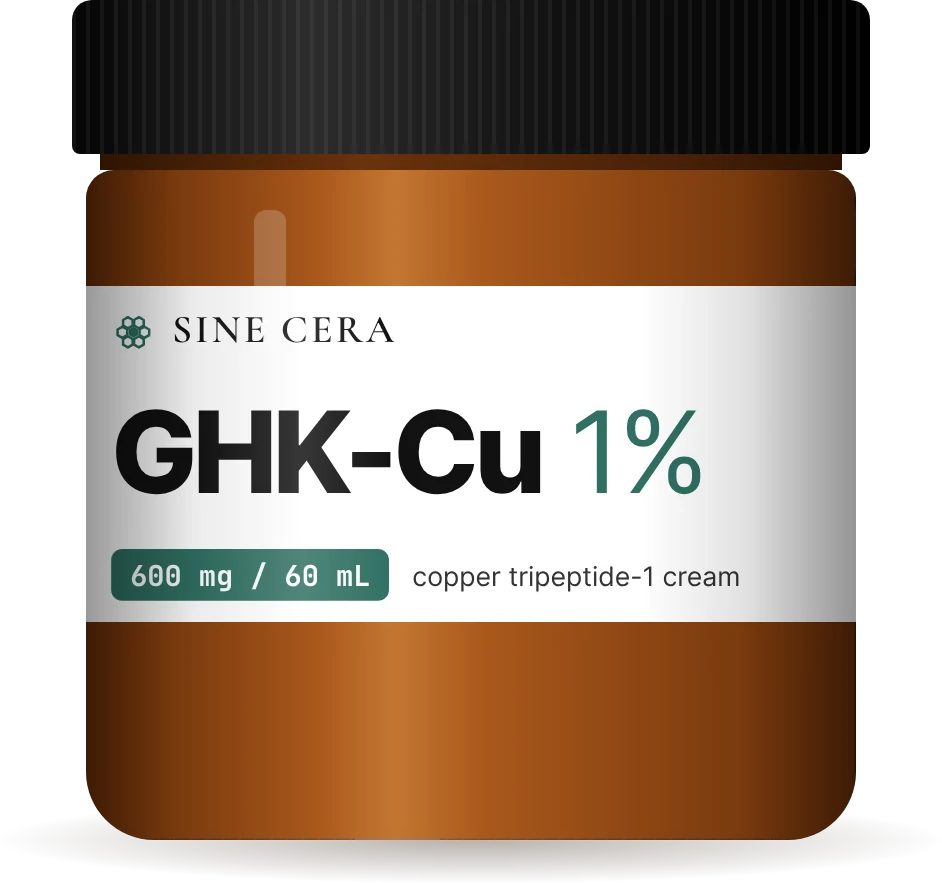
Sine Cera products carry 1% GHK-Cu, printed on the front with the milligrams: 600 mg in a 60 mL jar and 300 mg in a 30 mL bottle.
How to use it
- Apply to clean skin. A pea-sized amount of cream, or two to three pumps of serum, covers the face.
- Patch test first: try a little on your inner arm for a day or two before putting it on your face.
- Stop if your skin gets irritated.
- External use only, and keep it away from your eyes.
Storage
Keep it in the fridge with the lid on. Light and warmth are hard on peptides, which is why amber glass is the usual choice.
Cream or serum
The peptide is the same in both. The difference is the base.
| Cream | Serum | |
|---|---|---|
| Texture | Richer, stays on the surface longer | Light, water-based, dries quickly |
| When | Evening | Morning or evening |
| Good for | Drier skin, the last step of a routine | Oilier skin, or under a moisturiser |
| Sine Cera size | 60 mL jar, 600 mg | 30 mL bottle, 300 mg |
GHK-Cu and AHK-Cu
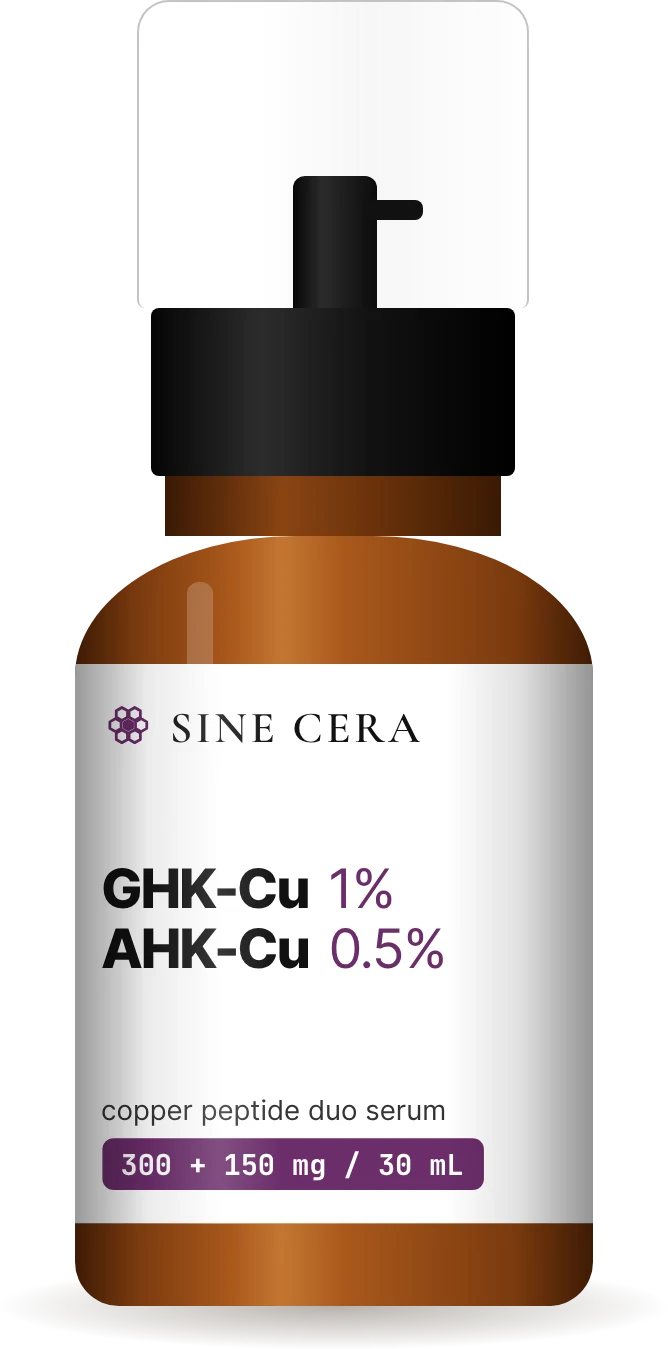
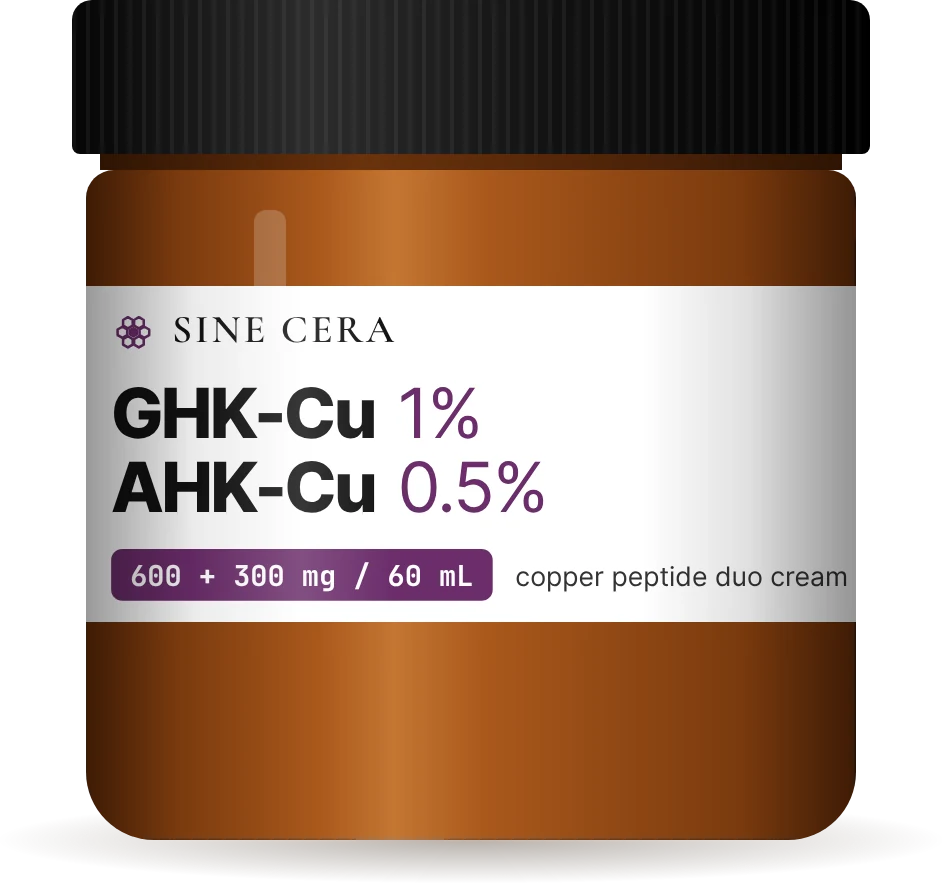
AHK-Cu is a close relative where alanine replaces glycine. The two are sometimes used together. See the AHK-Cu guide or GHK vs AHK: what’s actually different.
Common questions
Why is GHK-Cu blue?
The colour comes from the copper held by the peptide. A cream or serum with a meaningful amount of GHK-Cu and no added colour will be blue, from pale sky blue up to a deep blue at higher strengths.
What does 1% GHK-Cu mean?
One gram of copper tripeptide-1 in every 100 grams of product. In a 60 mL jar that is 600 mg, and in a 30 mL bottle it is 300 mg.
Can I use GHK-Cu with vitamin C or acids?
The usual advice is to use them at different times of day. Copper peptides are sensitive to acidic conditions, and strong acids or pure vitamin C applied straight on top may work against them. A simple routine is copper peptide in the evening and acids or vitamin C in the morning.
Does GHK-Cu need to be kept in the fridge?
We recommend it. Peptides keep best cold and out of the light, which is why Sine Cera products come in amber glass and say to store refrigerated.
Is GHK-Cu a medicine?
Not when it's sold as a cosmetic. A cosmetic is for the look and feel of skin and can't claim to treat or prevent any condition. Sine Cera products are cosmetics and make no medical claims.