Ingredients / AHK-Cu
AHK-Cu (copper tripeptide-3): what it is and how it differs from GHK-Cu
Updated 14 November 2026
- Name on an ingredient list
- Alanine/Histidine/Lysine Polypeptide Copper HCl
- Also called
- copper tripeptide-3, AHK copper, alanyl-histidyl-lysine copper
- Peptide formula
- C15H26N6O4, about 354 g/mol before copper
What AHK-Cu is
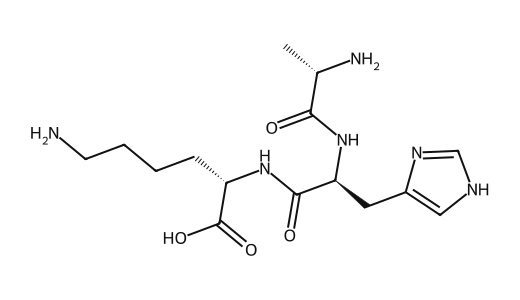
AHK is a tripeptide made of alanine, histidine and lysine. It’s a designed relative of GHK: the glycine at the start of the chain is swapped for alanine, which adds a single methyl group. The rest of the molecule is the same, including the histidine that does most of the work of holding copper.
When AHK is carrying a copper ion it’s written AHK-Cu.
The names it goes by
This ingredient has more names than most, which makes labels confusing:
- AHK-Cu, the short form
- Copper tripeptide-3, the name most suppliers use
- Alanine/Histidine/Lysine Polypeptide Copper HCl, as it can appear on a full ingredient list
They all refer to the same thing.
How it’s used
AHK-Cu is used in leave-on cosmetics. You’ll see it most in hair and scalp products, and sometimes in skincare alongside GHK-Cu.
It has much less published research behind it than GHK-Cu. Most of what exists is laboratory work. Treat confident claims about it with some caution, including ones from brands that sell it.
How it compares with GHK-Cu
| GHK-Cu | AHK-Cu | |
|---|---|---|
| First amino acid | Glycine | Alanine |
| Found naturally in the body | Yes | No, it’s a designed analogue |
| Usual ingredient name | Copper tripeptide-1 | Copper tripeptide-3 |
| Research history | Since the 1970s | More recent and much smaller |
| Mostly found in | Skincare | Hair and scalp products |
Using and storing it
The same as GHK-Cu: apply to clean skin, patch test first, stop if your skin reacts, and keep it in the fridge away from light. External use only.
For more on the pair, see the GHK-Cu guide.
Common questions
Is AHK-Cu the same as copper tripeptide-3?
Yes, they're two names for the same ingredient. Copper tripeptide-3 is the name most suppliers and brands use. On a full ingredient list it can also appear as Alanine/Histidine/Lysine Polypeptide Copper HCl.
Is AHK-Cu better than GHK-Cu?
They're different, and there isn't good evidence that one is better. GHK-Cu has decades more published research. AHK-Cu is newer and turns up mostly in hair and scalp cosmetics.
Why would a product use both?
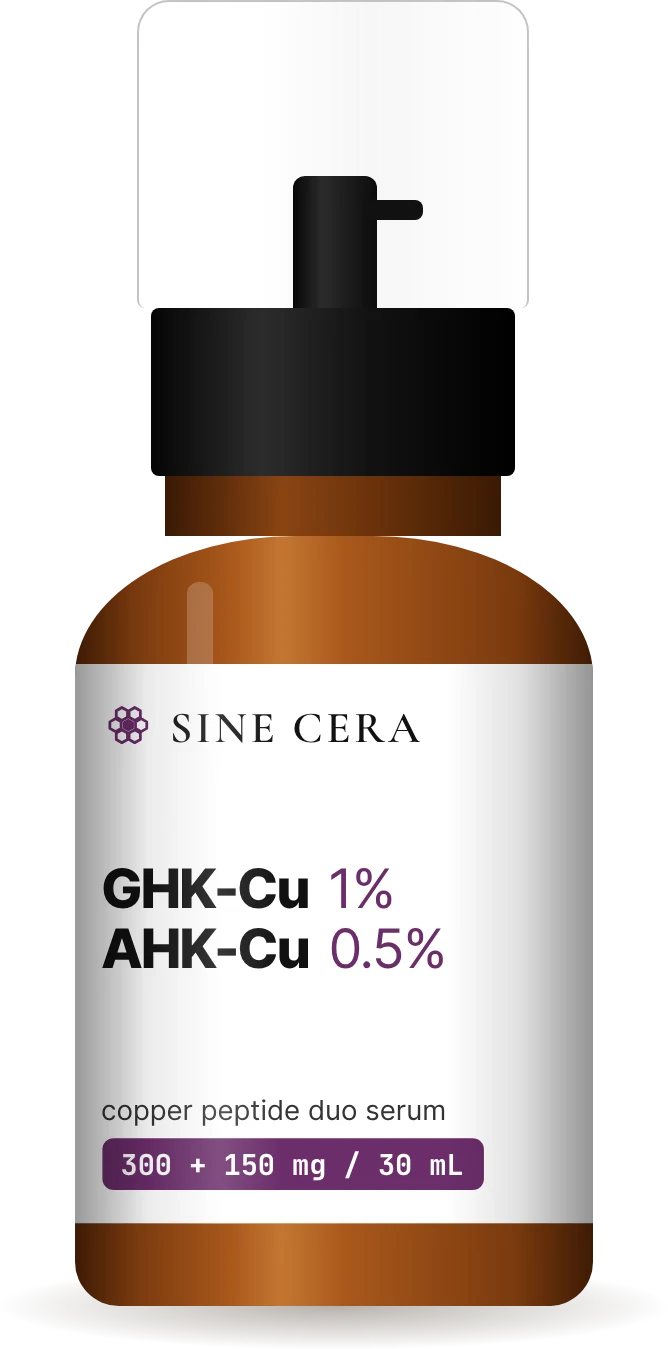
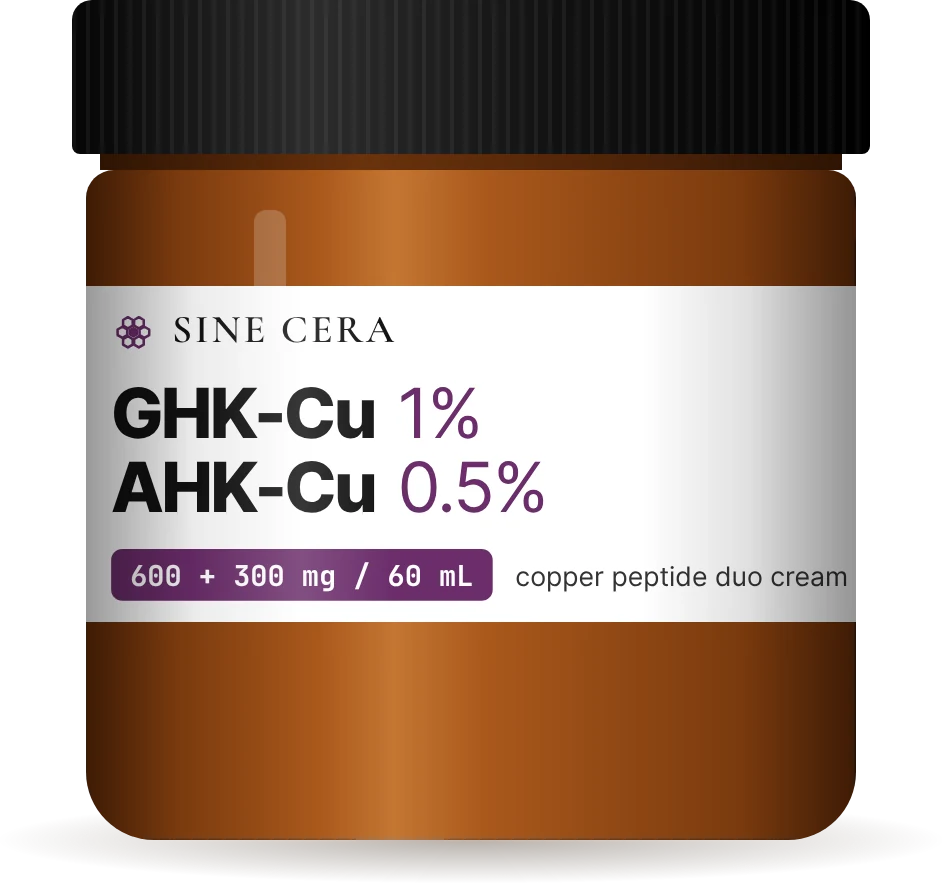
To include two related copper peptides in one product. Sine Cera's GHK-Cu + AHK-Cu products state the strength of each: 1% GHK-Cu and 0.5% AHK-Cu.
Is AHK-Cu blue too?
Yes. Like GHK-Cu, the colour comes from the copper the peptide carries.